Hand Flapping in 4-Year-Olds: Is It a Sign of Autism?
In short: Hand flapping can be a typical self-stimulatory behavior in toddlers, but when it persists past age 3, occurs frequently, or is accompanied by other developmental differences, it may be a sign of autism. If you're concerned, a free matching service like ABA Care Near Me can connect you with BCBA-led providers who offer evidence-based ABA therapy.
Key takeaways
- Hand flapping is a form of self-stimulatory behavior common in both neurotypical and autistic children.
- In autism, hand flapping often persists beyond age 3 and may occur with other signs like delayed speech or social challenges.
- Early intervention, including ABA therapy, can help children develop communication and coping skills.
- ABA therapy is often covered by insurance and Medicaid; ABA Care Near Me helps families find vetted providers for free.
Find your child's ABA provider
About 60 seconds · free & confidential
- ✓ Vetted, BCBA-led providers
- ✓ In-home, center & telehealth
- ✓ No obligation, ever
What Is Hand Flapping?
Hand flapping is a repetitive movement where a child rapidly moves their hands up and down or side to side, often with the wrists flexed. It is a type of self-stimulatory behavior, or 'stimming,' that many young children engage in. For neurotypical toddlers, hand flapping can be a way to express excitement, regulate energy, or explore sensory input. However, when hand flapping persists beyond the toddler years or occurs in specific patterns, it may be one of several signs of autism spectrum disorder (ASD).
Typical vs. Autism-Related Hand Flapping
It is important to understand that hand flapping alone does not mean a child has autism. Many 2- and 3-year-olds flap their hands when they are happy or overwhelmed. The difference often lies in the context, frequency, and accompanying behaviors. In autism, hand flapping may:
- Continue past age 3 or 4 without fading.
- Happen more frequently or intensely than in peers.
- Be paired with other repetitive movements like rocking or spinning.
- Occur during times of stress, anxiety, or sensory overload, rather than just excitement.
If your 4-year-old flaps their hands and also shows delays in speech, limited eye contact, or difficulty with social interactions, it may be worth discussing with a pediatrician or a developmental specialist.
🔗 Related reading: Summer & After-School ABA in New York: A Parent's Guide · Find ABA Near Me
Why Do Children with Autism Flap Their Hands?
For children on the autism spectrum, hand flapping often serves a regulatory function. It can help them manage overwhelming sensory input, express emotions they cannot yet verbalize, or provide a calming rhythm. This behavior is not 'bad' or something to be eliminated; rather, it is a natural way for the child to cope with their environment. Understanding the purpose behind hand flapping is the first step in supporting your child.
Sensory Processing and Self-Regulation
Many autistic children have differences in sensory processing. They may be hypersensitive to sounds, lights, or textures, or hyposensitive and seek out intense sensory input. Hand flapping can be a way to either stimulate or calm the nervous system. For example, a child might flap when entering a noisy classroom to self-soothe, or when they are excited about a favorite toy.
Looking for ABA therapy for your child? We match families with vetted, BCBA-led providers near you.
Get matched freeOther Signs of Autism in 4-Year-Olds
Hand flapping is rarely the only sign of autism. At age 4, children typically have developed language, social skills, and imaginative play. If you notice hand flapping along with any of the following, it may be time to seek an evaluation:
Social Communication Challenges
- Limited or no back-and-forth conversation.
- Difficulty making friends or sharing interests.
- Little to no eye contact or use of gestures like pointing.
- Not responding to their name consistently.
Repetitive Behaviors and Restricted Interests
- Strong attachment to unusual objects (e.g., spinning wheels, strings).
- Insistence on sameness in routines or food.
- Other repetitive movements like rocking, spinning, or toe-walking.
- Intense focus on a single topic (e.g., trains, letters).
Language and Play Differences
- Delayed speech or loss of previously acquired words.
- Echolalia (repeating words or phrases).
- Unusual play, such as lining up toys instead of pretending.
- Difficulty with imaginative play or imitating others.
Remember, every child is unique. A combination of these signs, especially when they affect daily functioning, warrants a professional evaluation.

🔗 Related reading: Starting ABA Therapy Before an Official Diagnosis · Local ABA Therapy
When Should You Seek an Evaluation?
If you are concerned about hand flapping or any other behaviors, trust your instincts. Early intervention is key to supporting a child's development. You can start by talking to your pediatrician or contacting your local early intervention program. Many states offer free developmental screenings for children under 5. If an autism diagnosis is confirmed, services like applied behavior analysis (ABA) therapy can begin as early as age 2 or 3.
There is no need to wait for a formal diagnosis to start helping your child. Even if your child does not have autism, addressing developmental delays early can make a significant difference.
How ABA Therapy Can Help
Applied behavior analysis (ABA) is an evidence-based therapy that helps children with autism build essential skills and reduce challenging behaviors. A board-certified behavior analyst (BCBA) designs a personalized program based on your child's strengths and needs. For hand flapping, ABA does not aim to stop the behavior entirely, but rather to teach alternative ways to communicate and self-regulate.
What ABA Looks Like for a 4-Year-Old
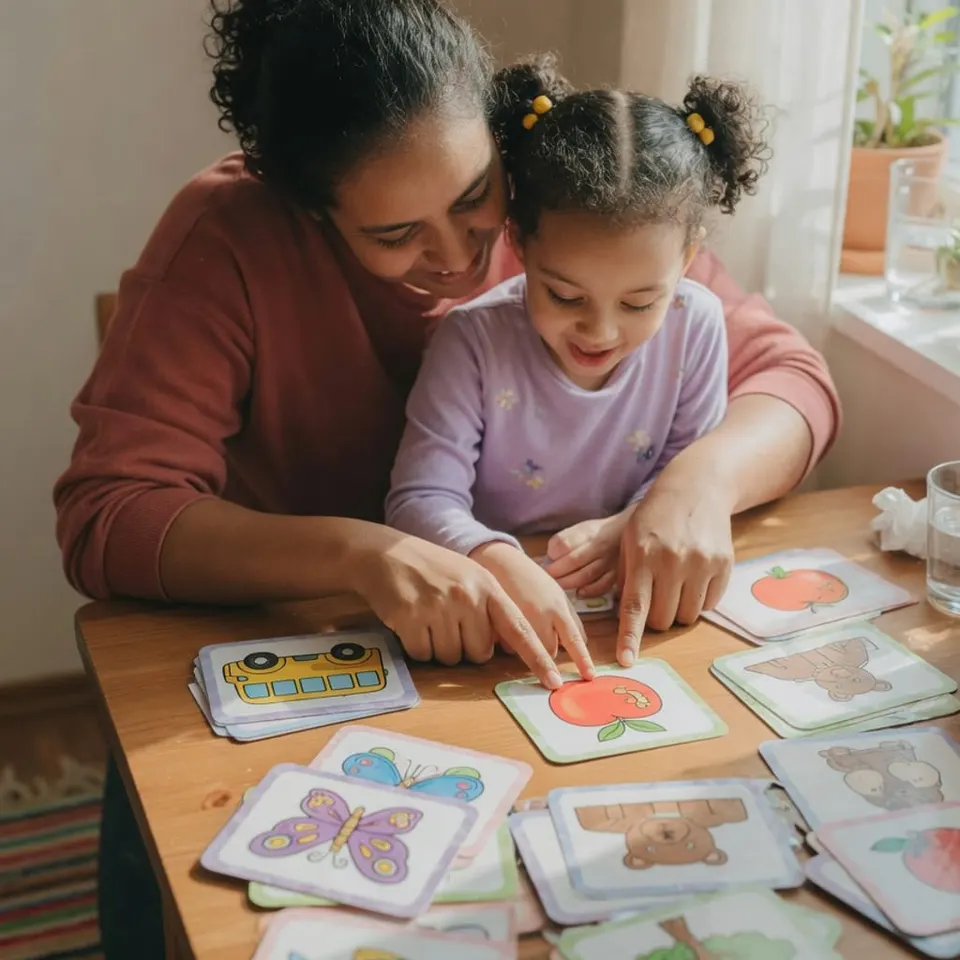
ABA therapy for a 4-year-old is play-based and child-centered. A BCBA or registered behavior technician (RBT) works with your child on goals like:
- Using words or pictures to request a break or express feelings.
- Engaging in parallel or cooperative play with peers.
- Following simple instructions and routines.
- Replacing hand flapping with a more socially acceptable calming strategy, such as squeezing a stress ball or taking deep breaths.
The goal is not to eliminate stimming completely, but to ensure it does not interfere with learning or social participation. Many children continue to flap as a self-regulation tool, and that is perfectly okay.
Costs and Insurance Coverage for ABA Therapy
ABA therapy can be expensive without insurance, often costing $50,000 to $100,000 per year. However, most private insurance plans are required to cover ABA therapy for autism under mental health parity laws. Medicaid also covers ABA in many states. Your out-of-pocket costs depend on your plan's deductible and copay.
Navigating insurance can be confusing. That is where a free matching service like ABA Care Near Me can help. We connect families with vetted, BCBA-led providers who accept your insurance, including Medicaid. You can compare options and choose the best fit for your child, all at no cost to you.
Practical Tips for Parents
If your 4-year-old flaps their hands, here are some supportive strategies:
- Observe and note patterns: When does the flapping happen? Is it during excitement, stress, or sensory overload? This can help you understand the trigger.
- Provide sensory alternatives: Offer weighted blankets, fidget toys, or a quiet space to help your child regulate.
- Model calm responses: Instead of saying 'stop flapping,' try 'I see you are excited. Let's take a deep breath together.'
- Encourage communication: Teach simple signs or picture cards for 'I need a break' or 'I am happy.'
- Celebrate strengths: Hand flapping is often a sign of joy or focus. Embrace your child's unique way of experiencing the world.
Common Mistakes to Avoid
When addressing hand flapping, parents may unintentionally do more harm than good. Avoid these pitfalls:
- Forcing the behavior to stop: Suppressing stimming can increase anxiety and lead to meltdowns. Instead, teach replacement skills.
- Assuming it is always autism: Hand flapping can be typical in young children. Look at the whole picture.
- Waiting too long for an evaluation: Early intervention is most effective. If you are worried, seek help sooner rather than later.
- Ignoring other signs: Hand flapping alone is not diagnostic. Pay attention to social, communication, and play skills.
How ABA Care Near Me Can Help
If you are concerned about your child's development, you do not have to navigate this alone. ABA Care Near Me is a free service that matches families with vetted, BCBA-led ABA providers in your area. We help you find clinics that accept your insurance, including Medicaid, and offer in-home, center-based, or school-based therapy. Simply fill out a short form, and we will provide personalized recommendations. Early support can make a world of difference. Let us help you take the next step.